SENTINEL
A real-time node graph built for agents, not adapted for them.
Vibe-code it. Take it apart. Put it on stage.
Full-feature trial. No time limit. Windows · NVIDIA.
You bring the what. It brings the how.
Years of shader math, data wrangling, engine quirks — that's its job now. Yours is the part that was always the point: knowing what it should be, and pushing it past the first version that works.
It builds the nodes and the panels to drive them.
Describe what you need and the agent writes it as real GPU shader code, made for the problem in front of it. The part fits the idea instead of the idea fitting the part. The controls come with it: the pads, scopes and mode switches that idea needs, drawn right in the viewport. Any harness drives it, including a local model, so the ceiling rises with frontier intelligence rather than with our roadmap.
Sound drives anything.
System audio or a mic, resolved into spectrum, mel bands and beat detection that can drive any parameter in the graph. Point a kick drum at a swarm and watch it scatter on the beat.
You decide what connects. It works out how.
Depth, hands, gestures, bodies, corners, blobs and edges, all running live off the same webcam at the same time. No Python virtual environments, no engines to build.
Each one publishes typed data on a single connection rather than a tangle you have to reshape by hand. The agent reads those types and wires the integration itself, so "relight the scene from the depth map and throw lightning off the fingertips" is a sentence instead of an afternoon of data wrangling.
Live diffusion.
Powered by Stability AI
Explore infinite worlds.
A feedback loop with depth and parallax estimation blended back in, so the frame stays coherent in three dimensions while it keeps regenerating. Steer with prompts and image references and travel as far in as you want to go.
Transform your world.
A streaming diffusion implementation rewritten from the ground up in native C++ on TensorRT, running SDXL Turbo. That rewrite is what makes it one of the fastest you can run, and why there is no Python virtual environment to repair before a show. Up to 52 fps at 896 × 512 with IP-Adapter on a 5090, upscaled 2× through a pipeline built to hold detail. ControlNet takes depth or line art so the result follows the shape of what you fed it, and you can build engines for your own models.
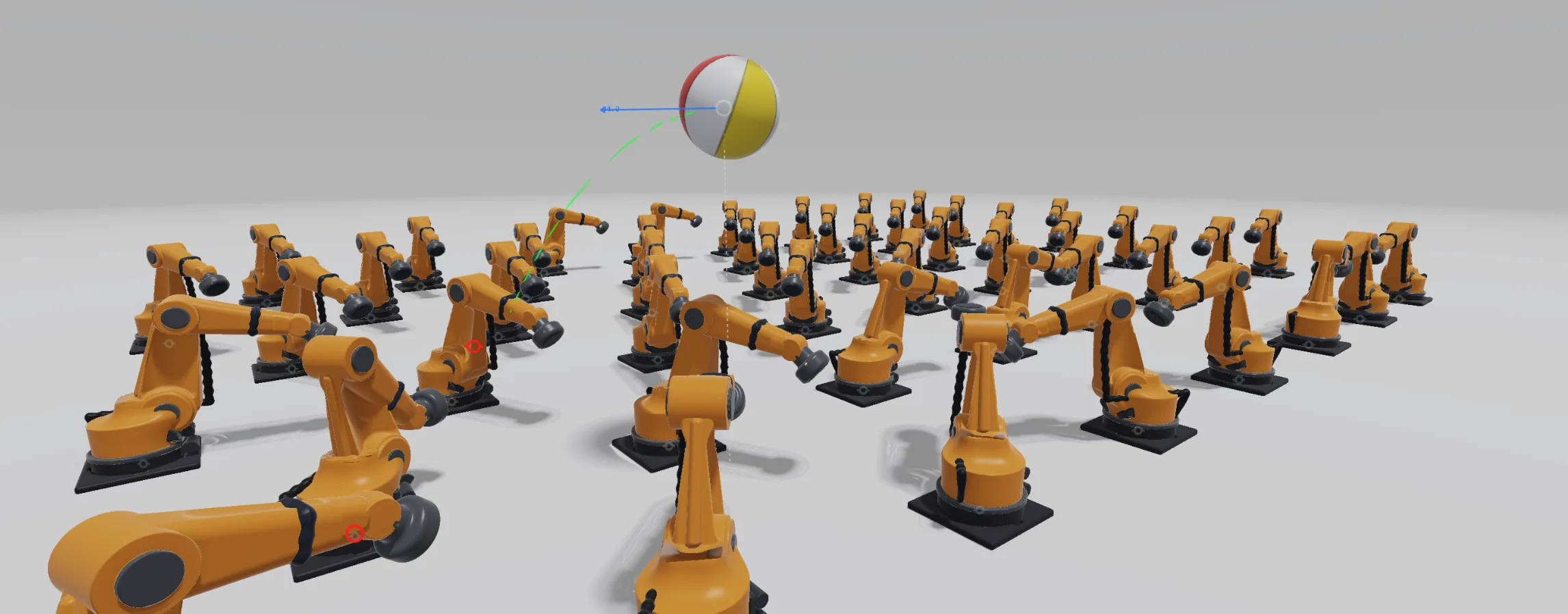
Nothing here was imported.
No mesh files, no textures, no asset store. Forty arms, every surface a signed distance field the agent wrote, at 60 fps on one GPU. Bring your own models when a job needs them. This needed none.
Pricing
Own your tools.
Founding price. Goes to $249.
- One-time purchase. No subscription.
- 12 months of updates and support, then $80/year if you want to keep getting new builds.
- Versions you own keep working forever.
- Activate on 2 machines.
[ ! ] ALPHA — Sentinel ships most weeks and moves fast. $199.99 gets today's app plus a year of what lands next.
Includes 12 months of updates & support · 2 machines · versions you own keep working forever
You are purchasing a revocable license to access Sentinel, not ownership of the software. This license is subject to our EULA and may be revoked in accordance with its terms.
Know when there's a new build.
Sentinel ships most weeks. Get an email when a stable release lands, and nothing else.
Questions.
01How does the agent work?
An agent — Claude Code, Codex, any harness you like, including a local model — runs beside the graph and talks to it over MCP. It writes modules as real GPU shader code and wires them in. Everything it writes is readable files on your disk. There is no metered generation and no credits; you bring your own model.
02Why not just point an agent at an existing node tool?
You can, and people do. The catch is that you're driving software built for human hands, so the agent takes the long way round, and whatever it builds is still capped by the node set someone else shipped. This was built to be operated by an agent from the start. Everything is reachable by one, and the nodes it writes are real GPU code on your disk, so there's no ceiling to work around.
03What's in the trial?
Everything, with no time limit. A license unlocks the outputs — Spout, NDI, and fullscreen — and recording above 1080p.
04What hardware do I need?
Windows and an NVIDIA GPU with CUDA 12.x. Shader and agent-built scenes run on ordinary RTX cards. Live diffusion is the heavy part: 12 GB on 40-series or newer, confirmed running on a 12 GB 5070 Ti at FP8 with IP-Adapter, or 16 GB on 30-series. Heavier pipelines want more.
05What happens after my year of updates?
Every version released before your expiry keeps working forever. Renewal will be $80 a year if you want the newer builds, and nothing stops working if you skip it. You can decide when you get there.
06What can it talk to?
OSC in and out. Spout, NDI, and fullscreen output. Mesh import for OBJ, FBX, and GLB. Export is MP4, or a deterministic, frame-accurate PNG sequence when you need one.
07Is it really alpha?
Yes. It ships most weeks and things break. Discord is where fixes and new builds land, and the community is part of what you are buying into. The tutorial playlist on YouTube takes you from install to first visuals.
System requirements.
| Minimum | Recommended | |
|---|---|---|
| GPU | NVIDIA RTX 30-series or newer | RTX 4090 / 5090 |
| GPU · diffusion | 40-series or newer, 12 GB · 30-series, 16 GB | RTX 4090 / 5090 |
| CPU | Intel Core i7 / AMD Ryzen 7 | Intel Core i9 / AMD Ryzen 9 |
| RAM | 16 GB | 32 GB |
| OS | Windows 10 64-bit | Windows 11 |
| CUDA | 12.x | 12.x |
Live diffusion is the only part with a real VRAM floor. Everything else, including every scene on this page, runs on much less.
Sentinel is built by one person and an agent, and it ships most weeks. Try it and help shape what it becomes.